You Won’t Believe What Quebec’s Old Town Hides in Plain Sight
Walking through Quebec City feels like stepping into a European storybook—except it’s in Canada. The cobblestone streets, ivy-clad buildings, and steep rooftops aren’t just charming; they’re centuries old. I was stunned by how well-preserved the architecture is, blending French elegance with North American resilience. This isn’t just history frozen in stone—it’s alive, breathing through every alleyway and café terrace. Let me take you behind the façade of one of North America’s most unique urban landscapes.
First Impressions: Stepping into North America’s Only Walled City
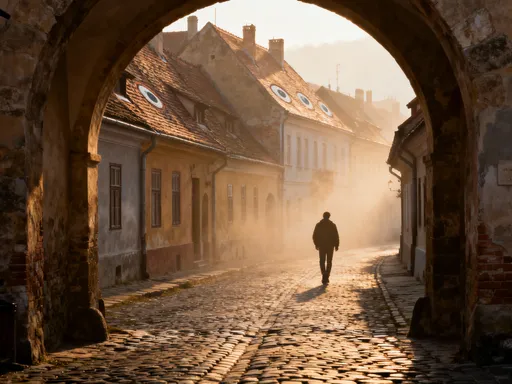
Arriving in Quebec’s Old Town from the banks of the St. Lawrence River, visitors are immediately met with a powerful sense of arrival. The fortified stone walls rise like sentinels from the edge of the plateau, their presence both imposing and inviting. These ramparts, stretching over 4.6 kilometers, form the only remaining fortified city walls in North America north of Mexico. As you pass through one of the historic gates—such as the Saint-Jean Gate or the Kent Gate—you’re not just entering a district; you’re stepping across a threshold of time. The echo of footsteps on cobblestones blends with distant church bells and the occasional clip-clop of horse-drawn carriages, creating an atmosphere that feels both ceremonial and intimate.
The city’s defensive origins are evident in every angle of its layout. Built to guard against invasion during the colonial era, Quebec’s fortifications reflect centuries of military strategy shaped by French and later British rule. The star-shaped design of the ramparts, inspired by 17th-century military engineering principles, was intended to maximize visibility and defensive fire across all approaches. Today, these walls serve a gentler purpose: protecting a cultural treasure rather than a strategic stronghold. Visitors can walk the entire circuit along the Promenade des Gabelles and Dufferin Terrace, gaining panoramic views of the river and surrounding landscape. It’s easy to imagine soldiers once pacing these same paths, vigilant for enemy ships on the horizon.
Sensory details enrich the experience at every turn. The scent of freshly baked baguettes drifts from corner bakeries, mingling with the crisp, clean air carried inland from the St. Lawrence. Bilingual street signs—French first, English below—signal the city’s dual heritage and linguistic pride. Flower boxes brim with geraniums in summer, while snow-laden rooftops glow under winter moonlight. These small but powerful cues reinforce that this is not a recreated theme park, but a living city where history isn’t reenacted—it’s lived.
The Heart of Heritage: Exploring Place d’Armes and Château Frontenac
At the center of Old Quebec lies Place d’Armes, a graceful square framed by some of the city’s most iconic buildings. Once used for military drills and public gatherings, it now serves as a tranquil gathering space where locals sip coffee beneath centuries-old plane trees. Surrounding the square are structures that span more than three hundred years of architectural evolution—from the ornate façade of the Seminary of Quebec to the classical lines of the former New Palace. Each building tells a story, not only of design trends but of shifting political powers, religious influence, and civic ambition.
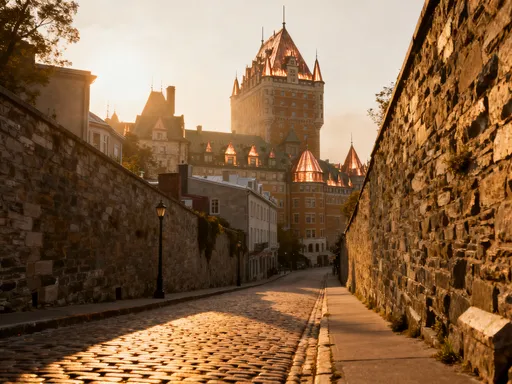
Dominating the skyline above Place d’Armes is the Château Frontenac, a grand hotel whose silhouette has become synonymous with Quebec City itself. Completed in 1893 by the Canadian Pacific Railway Company, the Château was designed to attract wealthy travelers to what was then a remote destination. Its imposing structure combines elements of Gothic Revival and French Renaissance architecture, featuring copper-clad roofs that have turned a distinctive green with age, pointed turrets, and symmetrical wings that cascade down the hillside. The hotel’s placement atop Cap Diamant ensures it is visible from miles away, a deliberate choice to make it a landmark as much as a lodging.
For visitors, the Château offers more than luxury accommodations. Guided tours provide access to its opulent public rooms, including the grand staircase modeled after those in French châteaux and the ornate ballroom where dignitaries have gathered for over a century. Photography enthusiasts will find the best angles along Rue du Petit-Champlain at sunrise, when the morning light softens the stone and the surrounding rooftops are still quiet. To avoid peak crowds, it’s recommended to visit early in the morning or during the shoulder seasons of May or September, when the city is less crowded but equally picturesque.
Beyond aesthetics, the Château Frontenac stands as a symbol of how tourism and preservation can coexist. While it operates as a modern hotel with contemporary amenities, every renovation has been carried out under strict heritage guidelines. Even minor changes, such as window replacements or roof repairs, require approval to ensure historical accuracy. This balance between function and fidelity makes the Château not just a monument, but a model for sustainable heritage use.
Hidden Layers: Residential Architecture in the Upper Town
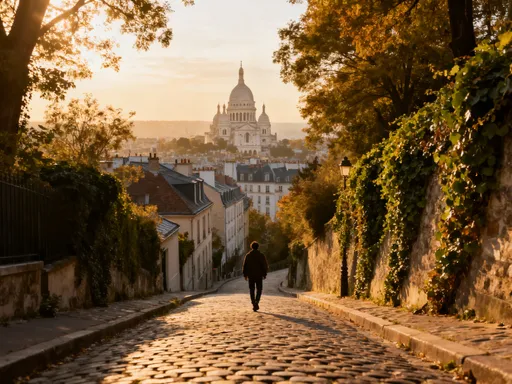
Away from the main plazas and tourist pathways, the Upper Town reveals a quieter, more personal side of Quebec’s architectural legacy. Streets like Rue du Petit-Champlain and Côte de la Montagne wind uphill with a gentle irregularity, their narrow lanes lined with stone houses that seem to grow organically from the rock beneath. These residences, many dating back to the 18th and 19th centuries, feature steeply pitched roofs designed to shed heavy snow, thick limestone walls for insulation, and wrought-iron railings that add both elegance and safety along steep staircases.
The architectural style here reflects a thoughtful adaptation of French domestic traditions to the realities of a northern climate. While the façades may resemble those found in Normandy or Brittany, the materials and structural choices are distinctly Canadian. Local limestone, quarried nearby, provides durability against freezing temperatures, while wood framing allows for flexibility in expansion and repair. Many homes include central courtyards or small gardens tucked behind high walls, offering private retreats that contrast with the public grandeur of the city’s main thoroughfares.
Modern renovations in the Upper Town are carefully regulated to preserve historical authenticity. Homeowners must adhere to strict guidelines regarding paint colors—typically muted tones like ochre, slate gray, or deep green—and window shapes that match original designs. Yet these rules do not prevent innovation. Many residents have upgraded heating systems, added energy-efficient insulation, and installed discreet modern kitchens and bathrooms without compromising exterior appearances. This careful evolution ensures that historic homes remain livable while honoring their past.
Walking these streets invites contemplation. Each doorway, shutter, and rooftop antenna tells a story of continuity and care. These are not museum pieces frozen in time, but homes where generations have celebrated birthdays, weathered storms, and welcomed neighbors. The quiet dignity of these buildings speaks to a deeper truth: that preservation is not about stopping change, but guiding it with respect.
Below the Heights: Architectural Contrasts in Lower Town (Basse-Ville)
Descending from the Upper Town via the funicular or the famous Breakneck Steps (l’Escalier Casse-Cou), one enters the Lower Town—a district that feels both older and more grounded than its elevated counterpart. Here, the city’s origins are most palpable. Place Royale, often called the birthplace of French America, sits at the heart of this neighborhood. Rebuilt after a devastating fire in 1682, the square is surrounded by reconstructed 17th-century buildings with steep roofs, wooden beams, and hand-forged hardware. At its center stands the Notre-Dame-des-Victoires Church, one of the oldest stone churches in North America, its façade worn smooth by centuries of wind and rain.
The layout of the Lower Town contrasts sharply with the formal symmetry of the Upper Town. Where the upper district follows a grid pattern influenced by military planning, Basse-Ville grew organically, shaped by trade routes, river access, and the natural topography of the land. Houses cluster tightly together, their foundations built on wooden pilings to withstand seasonal flooding from the St. Lawrence. Materials reflect local availability: limestone for lower walls, timber framing for upper stories, and slate or metal roofing chosen for longevity.
One of the most compelling examples of architectural dialogue in this area is the Musée de la civilisation. Nestled beside historic buildings, its modern design features glass walls, angular forms, and open interior spaces that stand in deliberate contrast to the surrounding masonry. Yet rather than clash, the museum complements its context by using similar stone finishes and maintaining a low profile that doesn’t obstruct views of older landmarks. This approach demonstrates how contemporary architecture can coexist with heritage sites without imitation or erasure.
Flood resilience remains a concern in the Lower Town, and modern adaptations reflect this. Raised thresholds, water-resistant materials, and improved drainage systems are now standard in renovations, ensuring that these historic structures can endure future climate challenges. At the same time, efforts to maintain authenticity mean that visible changes are kept subtle. The result is a district that honors its past while preparing for the future—a living archive of architectural wisdom.
Living History: How Locals Maintain Architectural Authenticity
The preservation of Quebec’s Old Town is not solely the work of architects or government agencies—it is a shared responsibility carried out daily by residents. Municipal regulations play a crucial role, with strict rules governing everything from exterior paint colors to rooftop additions. The Commission de protection du territoire et de l’occupation du sol (CTPOS) reviews all exterior modifications to ensure they align with historical standards. Even something as simple as replacing a window requires submitting plans for approval, ensuring that modern double-glazing doesn’t disrupt the visual rhythm of 18th-century façades.
Interviews with long-time homeowners reveal a deep sense of pride in stewarding these buildings. One resident, whose family has lived in the same stone house for over 150 years, describes the challenge of maintaining original plaster walls while upgrading electrical wiring and plumbing. “It’s not always easy,” she says, “but there’s a satisfaction in knowing you’re part of a continuum. When I repair a shutter or repaint a door, I’m not just fixing something—I’m honoring those who came before.”
Community-led initiatives further strengthen this commitment. Neighborhood associations organize clean-up days, historical walking tours, and workshops on traditional craftsmanship. Government programs offer tax incentives and grants for heritage restoration, making it financially feasible for families to invest in long-term upkeep. These efforts have helped prevent the kind of neglect or inappropriate development that has damaged other historic districts.
What sets Quebec apart is the understanding that authenticity does not mean stagnation. Buildings evolve—roofs are replaced, interiors modernized, uses adapted—but always within a framework of respect. A former warehouse might become a boutique hotel, a ground-floor shop might house a contemporary art gallery, yet the exterior remains true to its origins. This dynamic preservation model ensures that history isn’t locked behind glass, but integrated into everyday life.
Beyond Stone Walls: Public Spaces and Urban Design Philosophy
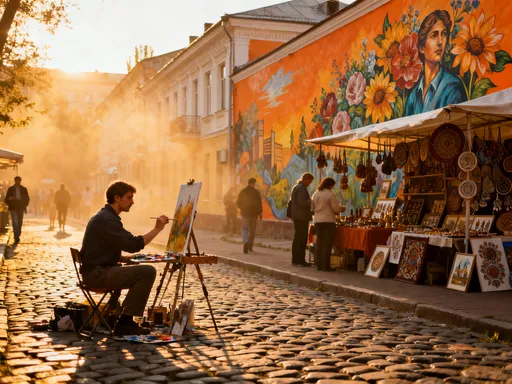
Quebec’s architectural beauty is enhanced by its thoughtful urban design, particularly in the way public spaces are curated to encourage connection and reflection. Plazas like Place Royale and Place d’Youville are not afterthoughts—they are integral to the city’s identity. Designed for gathering, celebration, and quiet contemplation, these open areas provide breathing room between dense rows of buildings. Fountains, benches, and seasonal flower displays add layers of sensory richness, while street performers and local markets animate the space with human energy.
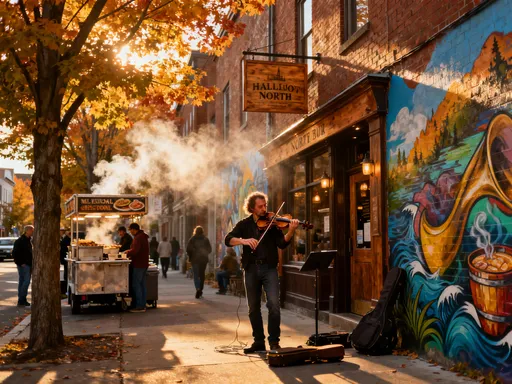
One of the most impactful design choices has been the prioritization of pedestrian access. Large portions of Old Quebec are car-free, with vehicles restricted to designated routes and underground parking. This decision transforms the experience of the city, allowing visitors to walk freely without the noise and danger of traffic. The absence of cars makes it easier to hear the rustle of leaves, the murmur of conversation, or the distant strains of a street musician’s violin. It also encourages slower tourism—a style of travel focused on immersion rather than checklist sightseeing.
This pedestrian-first philosophy extends beyond the walls. The Promenade Samuel-De Champlain, a scenic waterfront path stretching several kilometers, connects the historic district with modern green spaces. Designed to preserve historical sightlines, the promenade allows unobstructed views of the Château Frontenac and the river, reinforcing the relationship between nature, history, and urban life. Interpretive panels along the route educate visitors about the region’s ecological and cultural heritage, deepening the experience beyond aesthetics.
Urban planning in Quebec reflects a broader cultural value: that space shapes identity. By designing a city that invites walking, lingering, and interaction, planners have created an environment where social bonds are strengthened and cultural traditions are passed down. Whether it’s a family picnic on the Dufferin Terrace or an evening concert in Place d’Armes, public spaces become stages for living heritage.
Why This Matters: Quebec’s Architecture as Cultural Resistance
The preservation of French-style architecture in Quebec City is more than an aesthetic choice—it is an act of cultural continuity in a predominantly English-speaking country. In a nation shaped by British colonial influence, the survival of this distinctly Francophone urban landscape represents resilience and pride. Every stone façade, every bilingual sign, every croissant served in a centuries-old bakery is a quiet assertion of identity. The built environment becomes a vessel for language, cuisine, music, and seasonal festivals, anchoring a culture that might otherwise be diluted by globalization.
This cultural significance was formally recognized in 1985 when UNESCO designated Historic District of Old Québec as a World Heritage Site. The designation praised the city not only for its architectural integrity but for its role as “the cradle of French civilization in North America.” This international recognition has brought increased attention and resources, helping to fund conservation projects and raise awareness about the importance of heritage protection.
Yet the true value of Quebec’s architecture lies not in its designation, but in its daily use. Children play beneath the same arches where soldiers once stood guard. Couples share coffee in cafés that occupied the same corners for generations. Tourists from around the world walk the same streets that early settlers once navigated by torchlight. These moments of continuity are what make the city more than a collection of old buildings—they make it a living story.
For travelers, the lesson is clear: look beyond the postcard beauty. Take time to notice the craftsmanship in a wrought-iron gate, the slope of a roof designed for snow, the way sunlight falls on a cobblestone alley at dusk. Each detail carries meaning. Quebec’s Old Town is not just a place to visit—it is a place to understand. In its walls, windows, and winding streets, we find a powerful reminder that history is not behind us. It is all around us, waiting to be seen.